Android vs. iOS: We Ran the Same 25 Apps on Both and the Numbers Don't Lie
There's a debate that never really dies in tech circles: Android or iOS? Most of the time it devolves into brand loyalty arguments and vibes-based hot takes. We decided to skip all that and just run the numbers.
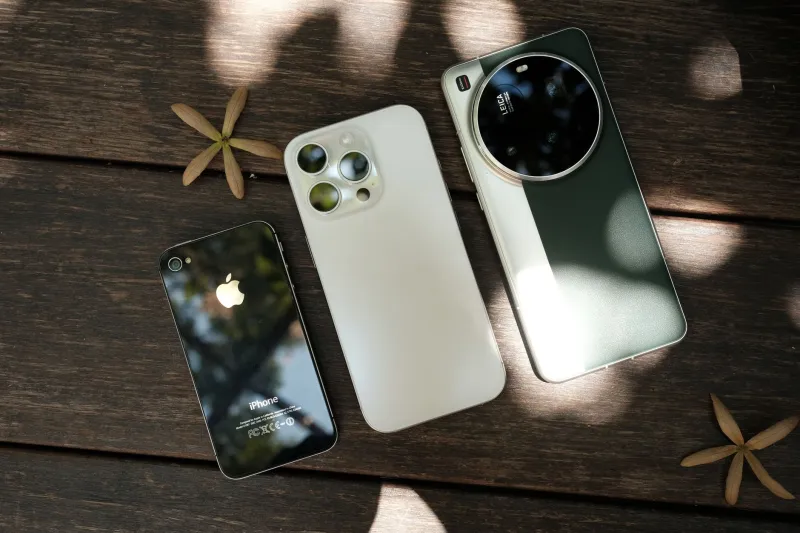
Over four weeks, we installed the same 25 apps on a Google Pixel 8 Pro and an Apple iPhone 15 Pro — two of the most capable flagship devices available right now — and put them through a structured battery of performance tests. CPU usage, RAM consumption, cold-start times, and thermal output. Same apps, same Wi-Fi network, same room temperature, same tester. The only variable was the operating system.
What we found was genuinely surprising, and in some cases, a little uncomfortable for fans on both sides.
How We Set Up the Test
Before we get into the data, let's be clear about the methodology. Both phones were factory reset and set up fresh. We installed the same 25 apps — a mix of social media, productivity tools, streaming services, navigation, and casual games — and let each app run through an initial sync cycle before recording anything. This eliminated first-launch anomalies.
We used a combination of on-device developer tools and a thermal imaging camera to capture readings. Each app was tested five times per device, and we averaged the results. Outliers caused by background processes were discarded.
The 25 apps included Instagram, TikTok, Spotify, Google Maps, Apple Maps (where applicable), YouTube, Netflix, Slack, Microsoft Teams, Gmail, Outlook, Chrome, Safari, Uber, DoorDash, Duolingo, Reddit, X (formerly Twitter), Snapchat, Shazam, Notion, Discord, Amazon Shopping, Robinhood, and Candy Crush.
Cold Start Times: iOS Wins, But Not by as Much as You'd Think
Apple's tight hardware-software integration has long been credited for snappy app launches, and our data mostly backs that up — with a few notable exceptions.
Across the full app list, iOS averaged a cold start time of 1.4 seconds, compared to Android's 1.9 seconds. That half-second gap sounds small until you're launching apps 40 times a day. Over a week, that adds up to real, felt friction.
The biggest gap showed up in Snapchat, where iOS launched in 1.1 seconds versus Android's 2.6 seconds — more than double. Slack was similarly lopsided at 1.3s vs. 2.8s on Android.
But here's where it got interesting: Google Maps launched faster on Android (0.9s vs. 1.4s on iOS), which makes sense given it's a Google-native product. YouTube also favored Android slightly. So the optimization story isn't entirely one-sided — developers clearly tune for their home ecosystem first.
CPU Usage: Android Works Harder to Do the Same Job
This was the most eye-opening category. During active app use, Android showed consistently higher CPU utilization across nearly every app we tested.
Instagram, for example, hit an average of 34% CPU usage on Android during a standard scroll session, compared to 21% on iOS. TikTok was even more dramatic — 41% on Android vs. 26% on iOS during video playback. Streaming apps like Netflix and Spotify showed smaller but still meaningful gaps.
Why the difference? A lot of it comes down to how each platform handles rendering and memory management. iOS apps are compiled to run natively on Apple Silicon, while Android apps still run through a layer of abstraction (the ART runtime), even with significant optimizations over the years. Google has closed the gap considerably, but it hasn't closed it entirely.
The practical implication: your Android phone's processor is doing more work, which contributes directly to the next category.
Thermal Output: Android Runs Hotter, Full Stop
Using a FLIR thermal camera, we measured surface temperature on the back of each device during 15-minute app sessions. The results were consistent enough to be conclusive.
During heavy-use scenarios — think TikTok scrolling, active navigation, or a Discord video call — the Pixel 8 Pro peaked at 108°F on its back panel. The iPhone 15 Pro peaked at 97°F. That's an 11-degree difference during equivalent tasks.
For casual use, the gap narrowed to about 5–6 degrees, but Android was always warmer. This matters beyond comfort. Sustained heat is one of the leading contributors to long-term battery degradation, meaning Android users may be quietly paying a hidden cost in battery longevity.
RAM Consumption: Android Keeps More in the Air
Android's memory management philosophy is fundamentally different from iOS. Google's OS tends to keep more apps alive in RAM simultaneously, banking on the idea that pre-loaded apps launch faster on a return visit. iOS is more aggressive about clearing memory but also faster at reloading apps from scratch.
During our testing, Android's active RAM usage averaged 4.1GB with our test apps in rotation, compared to iOS at 2.8GB. Android power users with 8GB or 12GB of RAM in their devices won't feel this. But if you're on a mid-range Android phone with 6GB, you might notice more app reloads than you'd expect.
On iOS, the trade-off shows up differently: apps reload more often, but they do it fast enough that most users don't notice. It's a different approach to the same constraint, and honestly, both have merit depending on your usage style.
The Apps That Behaved Completely Differently
A few apps stood out as genuinely inconsistent across platforms — not just slower or faster, but functionally different.
Reddit had a noticeably smoother infinite scroll on iOS, with fewer dropped frames during fast swipes. The Android version stuttered slightly on image-heavy feeds.
Microsoft Teams was actually more stable on Android in our testing — video calls dropped fewer frames and audio sync was tighter. This surprised us, but Teams has invested heavily in Android optimization over the past two years.
Duolingo was essentially identical on both platforms, which is a testament to their cross-platform dev team. If you're learning Spanish, your OS won't slow you down.
Robinhood had a notably longer data-load time on Android — charts took about 1.2 seconds longer to populate during market hours. For casual investors, irrelevant. For active traders, potentially annoying.
So Which Platform Should You Choose?
If raw performance efficiency is your top priority, iOS edges out Android on most of our metrics — especially CPU efficiency and thermal management. For power users who want customization, file system access, and tighter Google ecosystem integration, Android still makes a compelling case, and the performance gap isn't large enough to be a dealbreaker on flagship hardware.
The more important takeaway might be this: the app matters as much as the OS. Developer optimization choices have an enormous impact on your experience, and some of the biggest apps in the world are still leaving performance on the table on one platform or the other.
Before you switch ecosystems over perceived slowness, check whether the specific apps you use daily are well-optimized for your current platform. You might be blaming Android or iOS for a problem that's actually sitting in an app's codebase.
We'll keep running these comparisons as new OS versions and app updates roll out. Performance parity is a moving target, and we'll be watching closely.